
Hollywood Can’t Help Themselves
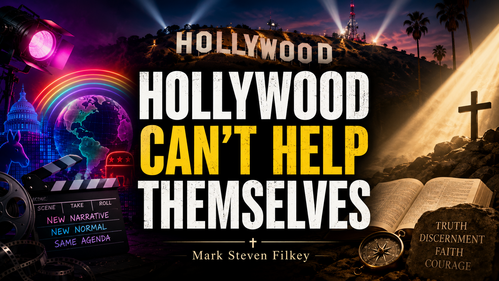
Hollywood has always sold stories. For decades those stories shaped how Americans saw themselves—heroes, families, good versus evil, the dignity of ordinary life. In recent years the product has changed. A large portion of the industry’s most visible voices, power brokers, and creative decision-makers treat entertainment as a delivery system for a specific set of cultural claims: that biological sex is malleable, that traditional marriage and sexual ethics are outdated or oppressive, that climate catastrophe is the overriding moral crisis, that Christianity is at best private and at worst the problem, and that children must be affirmed in whatever identity they claim. The pattern is persistent enough that the industry’s defenders and critics both recognize it. Hollywood simply cannot seem to help itself.
The political and financial data make the tilt hard to dismiss. Rasmussen Reports’ 2026 survey found that 47 percent of Americans still describe Hollywood’s politics as liberal, compared with only 10 percent who see it as conservative. Among those who view the industry as liberal, 64 percent say movies and the movie business have a negative impact on American society. Overall, only 31 percent of adults believe Hollywood exerts a positive influence. OpenSecrets data for the 2023–2024 cycle shows the same directional reality in campaign money: major entertainment companies and production entities—Warner Bros. Discovery, Amblin Partners, Walt Disney, Bad Robot, Creative Artists Agency, and others—directed the overwhelming share of their contributions to leftest Democrats and liberal groups. SAG-AFTRA’s own political giving has historically run 90 percent-plus Democratic. These are not fringe activists; they are the institutional bloodstream of the business.
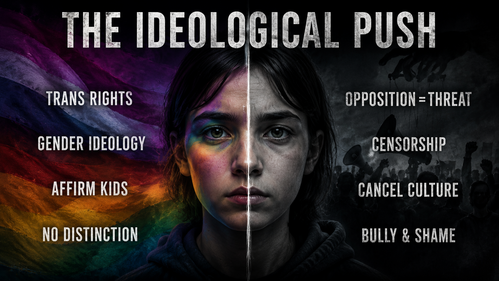
That bloodstream produces outspoken advocates. On transgender issues and “children’s trans rights,” figures such as Elliot Page have used high-profile platforms to frame medical transition and social affirmation as non-negotiable justice. Trans actresses and advocates including Laverne Cox and Karla Sofía Gascón (the latter central to the awards-season conversation around Emilia Pérez) have publicly framed opposition as existential threat. In case you missed it, the opposition or THREAT they are talking about is You - it’s us - it’s all authentic born again Bible believing Christians! A number of high-profile parents—Gabrielle Union and Dwyane Wade, and more recently public discussion around Jennifer Lopez’s family—have spoken of raising transgender-identifying children and called for greater institutional affirmation. Organizations such as GLAAD amplify these voices and pressure media outlets they judge insufficiently supportive. The same networks routinely treat any distinction between adult consensual homosexuality and the medicalization of minors, or between same-sex attraction and the erasure of sex-based categories, as bigotry.
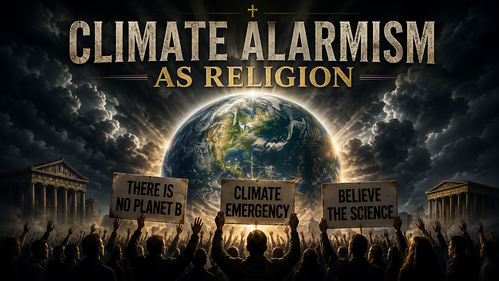
Climate activism has its own Hollywood hierarchy. Leonardo DiCaprio remains the most visible and well-funded celebrity voice, with foundations, documentaries, and repeated public warnings about planetary emergency. Mark Ruffalo, Jane Fonda, Don Cheadle, and others have linked environmental messaging to broader progressive politics. The industry has internalized the theme: recent Climate Reality Check analyses of Oscar-nominated films have tracked rising on-screen climate visibility, and major franchises such as James Cameron’s Avatar sequels traffic in clear ecological allegory. Evolution-as-worldview and soft atheism or agnosticism appear less as explicit sermons and more as the default operating system—creation narratives, intelligent design, or Christian teleology are rarely treated as serious live options in mainstream prestige projects.
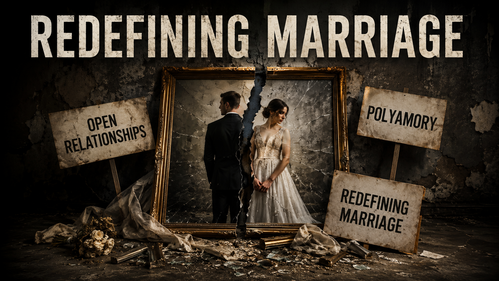
Open relationships and the deconstruction of traditional marriage surface more often as lifestyle branding than as formal doctrine, yet the cultural signal is consistent: lifelong exclusive heterosexual marriage is frequently portrayed as one option among many, often the least exciting. The cumulative effect is an anti-Christian atmosphere in which biblical sexual ethics, the givenness of male and female, and the priority of the natural family are treated as obstacles to progress rather than as wisdom.
The films themselves illustrate the compulsion. Emilia Pérez (2024), Jacques Audiard’s musical about a cartel boss who undergoes gender transition, became an awards magnet and a flashpoint precisely because it centered that transformation as redemptive and glamorous. Critics on the left celebrated its boldness; critics on the right saw ideological wish-fulfillment. GLAAD’s own “Where We Are in Film” reports have tracked LGBTQ character counts and, in 2025 data, noted zero transgender characters across films from the top ten U.S. distributors—an acknowledgment of market correction even while advocacy groups continue to press for more. Climate-conscious projects and queer-centered indies keep arriving. Studios still green-light stories that treat progressive orthodoxy on sex and identity as the moral high ground. When audience fatigue or box-office underperformance appears—as it has for several heavily message-driven titles in recent cycles—the industry’s public response is rarely repentance. It is usually a temporary tactical retreat followed by the next wave of the same priorities.
Behind the camera the pattern holds. Directors and producers such as Ava DuVernay, Ryan Coogler, Jordan Peele, and Shonda Rhimes have built careers that intertwine artistic ambition with explicit progressive social messaging. Lilly Wachowski and other openly transgender creatives have produced work centered on trans identity. Writers’ rooms and development executives who rose in the post-2010s environment absorbed the same norms. The result is not a conspiracy of a few villains; it is a monoculture. People who dissent too loudly—on biological sex, on the wisdom of medicalizing gender-distressed youth, on the uniqueness of Christian claims—find the professional cost high. That is why the list of mainstream stars willing to criticize the dominant line remains short and mostly limited to those already outside the prestige track.
Christians should notice two things at once. First, the data and the public statements are not invented by culture warriors. They are measurable. Second, the compulsion is not new; it is the latest form of an older temptation—to use the powerful medium of story to catechize a generation in a rival gospel. Scripture is not silent on the topics Hollywood treats as settled progressive doctrine. Genesis 1–2 presents male and female as created categories, not social constructs. Jesus reaffirms that design in Matthew 19. Romans 1 and 1 Corinthians 6 speak directly to sexual ethics. The command to protect children from stumbling appears throughout the New Testament. Climate stewardship is a legitimate concern; apocalyptic political religion that displaces the Creator is not. Atheism and agnosticism are real intellectual options; treating them as the only sophisticated ones is propaganda.
The proper Christian response is neither panic nor passive consumption. It is clear-eyed discernment, support for storytellers who still believe beauty and truth can coexist without ideological checklists, and the quiet confidence that reality is not rewritten by box-office committees or awards campaigns. Hollywood will keep producing what its dominant culture rewards. Audiences, churches, and parents are not required to subsidize it or to pretend the messaging is neutral. The industry cannot help itself. That does not mean the rest of us must help it either.
Truth has a longer track record than any studio’s current orthodoxy. The stories that last are still the ones that tell the truth about the human heart, the givenness of creation, and the possibility of redemption. Hollywood’s latest wave of messaging will eventually look as dated as every previous fashion. Until then, Christians can watch with their eyes open, teach their children accordingly, and keep telling better stories.
END
END
Posted in Hollywood
Recent
Archive
2026
September
Categories
no categories
No Comments